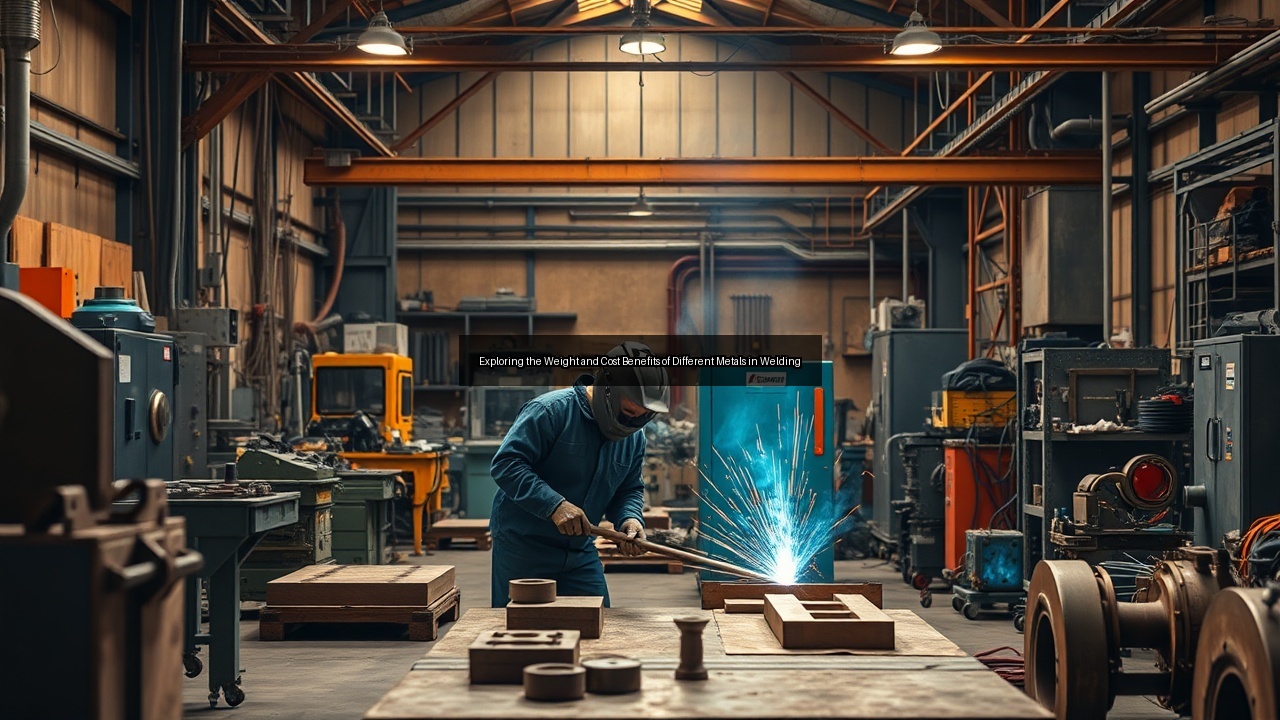
Exploring the Weight and Cost Benefits of Different Metals in Welding
Understanding the Role of Metals in Welding and Fabrication
Overview of Common Welding Metals
Welding and fabrication utilize various metals, each with distinct characteristics that influence their suitability for different applications. Steel remains the most widely used metal in welding due to its strength and versatility. Stainless steel, with its corrosion resistance, plays a vital role in industries like food processing and pharmaceuticals. Aluminum, known for its lightweight properties, is essential in aerospace applications, where reducing weight without sacrificing strength is critical. Additionally, copper and its alloys are often employed in electrical applications due to their excellent conductivity. Understanding these metals’ unique properties aids in selecting the right material for specific welding and fabrication projects.
Properties of Aluminum in Welding
Aluminum stands out in welding and fabrication due to its low density and high strength-to-weight ratio. This metal's resistance to corrosion makes it ideal for outdoor applications and marine environments. When welding aluminum, techniques such as TIG (Tungsten Inert Gas) and MIG (Metal Inert Gas) welding are commonly employed, each offering unique benefits. TIG welding provides precision and control, while MIG welding delivers speed and efficiency. However, aluminum also presents challenges, such as its thermal conductivity and the need for proper joint preparation to ensure strong welds. Proper expertise and tools are essential to overcome these challenges and achieve high-quality aluminum welds.
Comparative Analysis of Metal Alloys
Metal alloys, which combine two or more metals to enhance properties, are crucial in welding and fabrication. For instance, steel alloys like carbon steel and alloy steel exhibit varying levels of hardness and tensile strength, catering to diverse industrial needs. Aluminum alloys, categorized into series based on their primary alloying elements, further expand the possibilities in fabrication. The 6000 series, for example, is popular for structural applications due to its excellent corrosion resistance and weldability. Understanding the specific characteristics of these alloys helps engineers and fabricators select the most appropriate material for their projects, ensuring optimal performance and durability.
Cost Benefits of Different Metals in the Fabrication Process
Cost Analysis: Aluminum vs. Steel
When evaluating welding and fabrication costs, the choice between aluminum and steel can significantly impact the overall budget. Aluminum typically has a higher initial cost compared to steel, which may deter some manufacturers. However, the benefits of aluminum, such as weight reduction and corrosion resistance, can lead to lower operational costs over time, particularly in industries like aerospace where fuel efficiency is paramount. Steel, while less expensive upfront, may incur higher long-term costs due to maintenance and replacement needs in corrosive environments. Thus, a thorough cost analysis that considers both initial investment and long-term savings is essential for informed decision-making in metal selection.
Long-term Cost Efficiency of Alloys
Investing in high-quality metal alloys can enhance long-term cost efficiency in the fabrication process. Alloys designed for specific applications often exhibit improved performance, reducing the need for frequent repairs or replacements. For instance, using corrosion-resistant alloys in harsh environments minimizes maintenance costs. Additionally, the strength of certain alloys can allow for thinner materials without compromising structural integrity, leading to savings in material costs and improved energy efficiency during machining and fabrication. fabrication companies Understanding the lifecycle costs associated with different alloys empowers manufacturers to make strategic decisions that align with their operational goals and budgetary constraints.
Impact of Material Costs on Manufacturing Workflow
The fluctuating prices of metals significantly impact manufacturing workflows in welding and fabrication. High material costs can lead to budgetary constraints, prompting manufacturers to reconsider designs or substitute materials. Such changes often require adjustments in workflow, including re-evaluation of tools and machines used in fabrication. For instance, switching from steel to aluminum may necessitate different welding techniques and equipment, altering the entire manufacturing process. Moreover, price volatility can affect project timelines, as securing materials at optimal rates becomes critical. Establishing strong relationships with suppliers and utilizing forecasting tools can help companies navigate these challenges, ensuring a more stable manufacturing workflow.
Weight Considerations in Metal Selection for Welding
Importance of Weight in Aerospace Applications
Weight plays a crucial role in aerospace applications, where every pound saved translates to significant fuel savings and improved performance. The aerospace industry increasingly relies on lightweight metals like aluminum and titanium to enhance efficiency and reduce operational costs. Engineers prioritize materials that maintain structural integrity while minimizing weight, leading to innovative designs in aircraft and spacecraft. Welding techniques such as TIG welding allow for precise assembly of lightweight components, ensuring strength without unnecessary bulk. This focus on weight efficiency not only enhances performance but also aligns with sustainability goals by reducing energy consumption during operation.
Lightweight Materials and Automated Technologies
The integration of lightweight materials in welding and fabrication is complemented by advancements in automated technologies. Automated welding machines and robotic arms enhance precision and speed while working with materials that demand careful handling. Automation facilitates the production of complex geometries in lightweight components, ensuring consistent quality and reducing human error. The synergy between lightweight materials and automated technologies enables manufacturers to meet increasing demands for efficiency and performance while maintaining cost-effectiveness. This combination fosters innovation in industries ranging from automotive to aerospace, where the push for lightweight solutions continues to evolve.
Balancing Weight and Strength in Design
Designing for welding and fabrication requires a careful balance between weight and strength. While lightweight materials are desirable, they must meet the necessary strength requirements for their intended applications. Engineers employ advanced modeling and simulation techniques to analyze stress and strain on different materials, ensuring that designs optimize both weight and durability. This balancing act often involves selecting the right alloys and employing appropriate welding techniques, such as SMAW (Shielded Metal Arc Welding) or GMAW (Gas Metal Arc Welding), to achieve reliable joints. Achieving this equilibrium is essential in sectors like construction and transportation, where safety and performance are paramount.
Quality Control and Inspection in Metal Fabrication
ISO 9001 Standards in Welding
ISO 9001 standards play a pivotal role in ensuring quality control within the welding and fabrication industry. These internationally recognized criteria establish a framework for consistent quality management practices, helping organizations enhance their operational efficiency. Adhering to ISO 9001 ensures that welding processes meet stringent quality requirements, leading to reduced defects and improved customer satisfaction. Companies that implement these standards often see a positive impact on their manufacturing workflow, as they can identify areas for improvement and streamline operations. Certification under ISO 9001 not only boosts internal processes but also enhances an organization’s reputation fabrication and welding in a competitive market.
Techniques for Ensuring Quality in Metal Fabrication
Various techniques ensure quality throughout the metal fabrication process. Regular inspections at different fabrication stages—such as during cutting, welding, and assembly—help identify potential issues before they escalate. Non-destructive testing methods, like ultrasonic and radiographic testing, allow fabricators to assess weld integrity without damaging the components. Implementing statistical process control techniques also aids in monitoring production consistency, helping to maintain high standards. Training welders and fabricators in best practices and utilizing advanced tools for quality assurance further enhances the final product's reliability in welding and fabrication.
Role of Inspection in Cost Management
Inspection plays a vital role in cost management within welding and fabrication. By identifying defects early in the production process, companies can prevent costly rework and material waste. Implementing robust inspection protocols aligns with the overall quality assurance strategy, ensuring that products meet industry standards and customer expectations. A well-integrated inspection process can also lead to improved workflow efficiencies, as it streamlines operations and minimizes downtime caused by quality issues. Ultimately, investing in thorough inspection processes enhances the bottom line, safeguarding both financial resources and the company’s reputation.